Imminent Death
Roger Hilton
24 January – 28 February 2026
Vardaxoglou, London
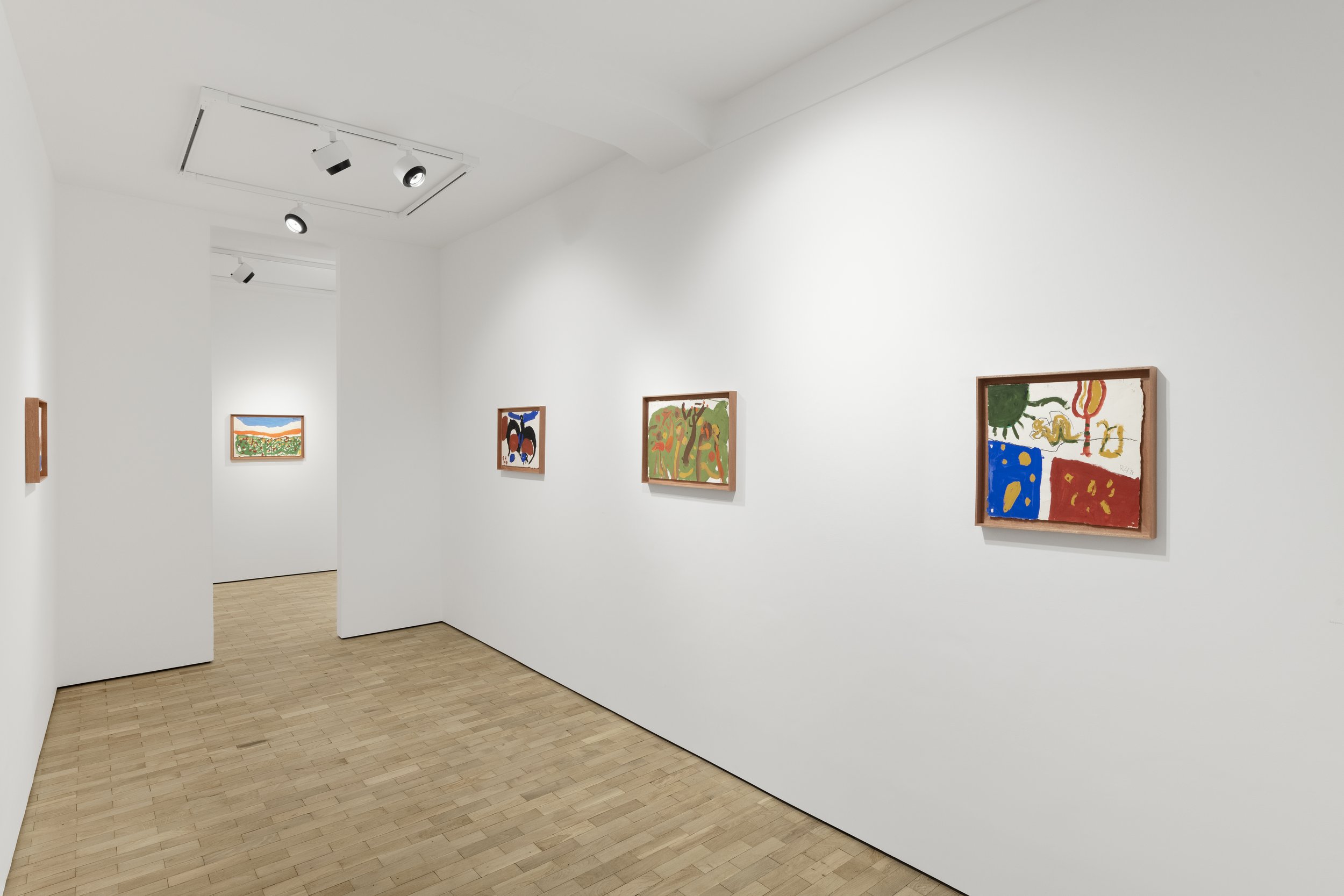
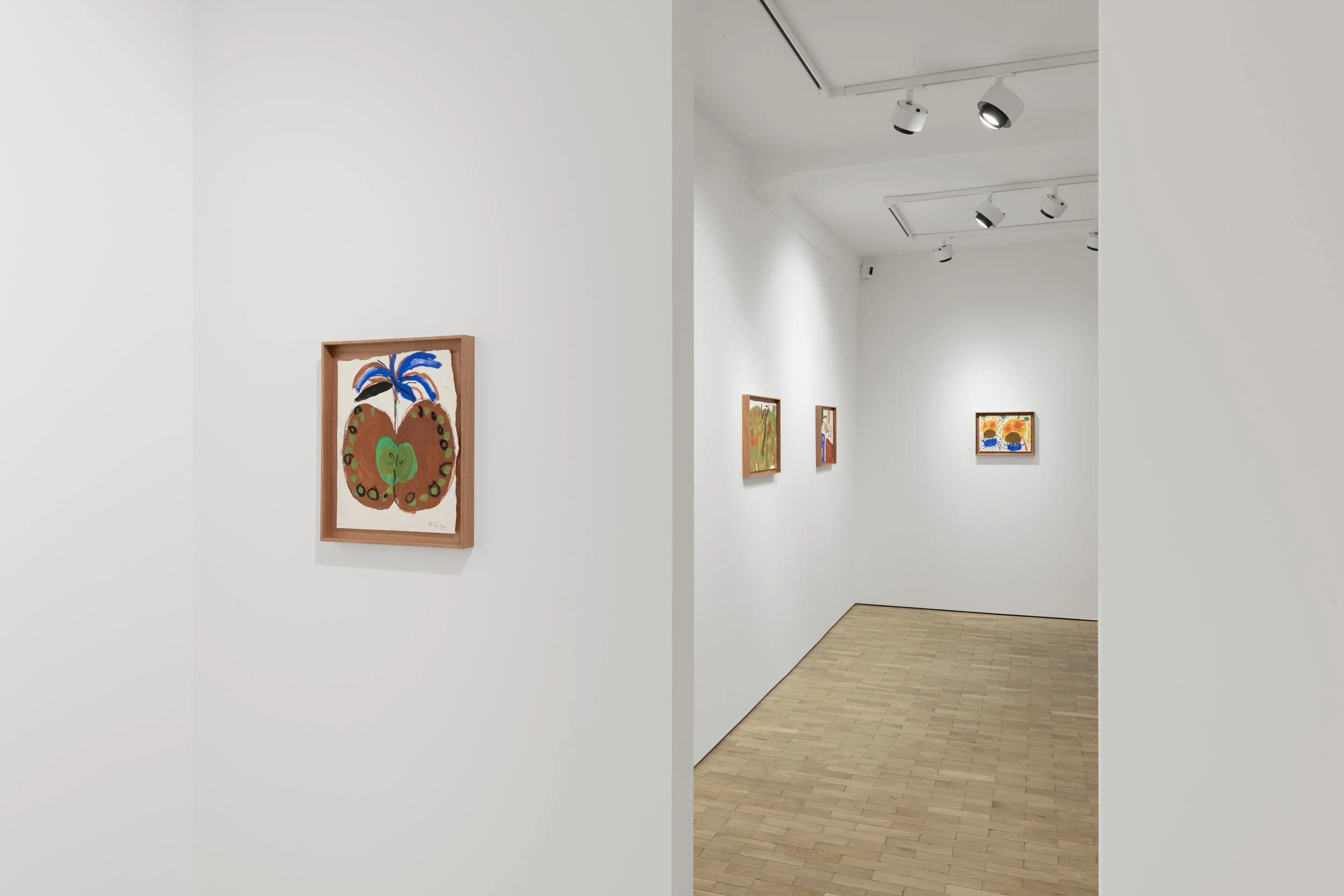
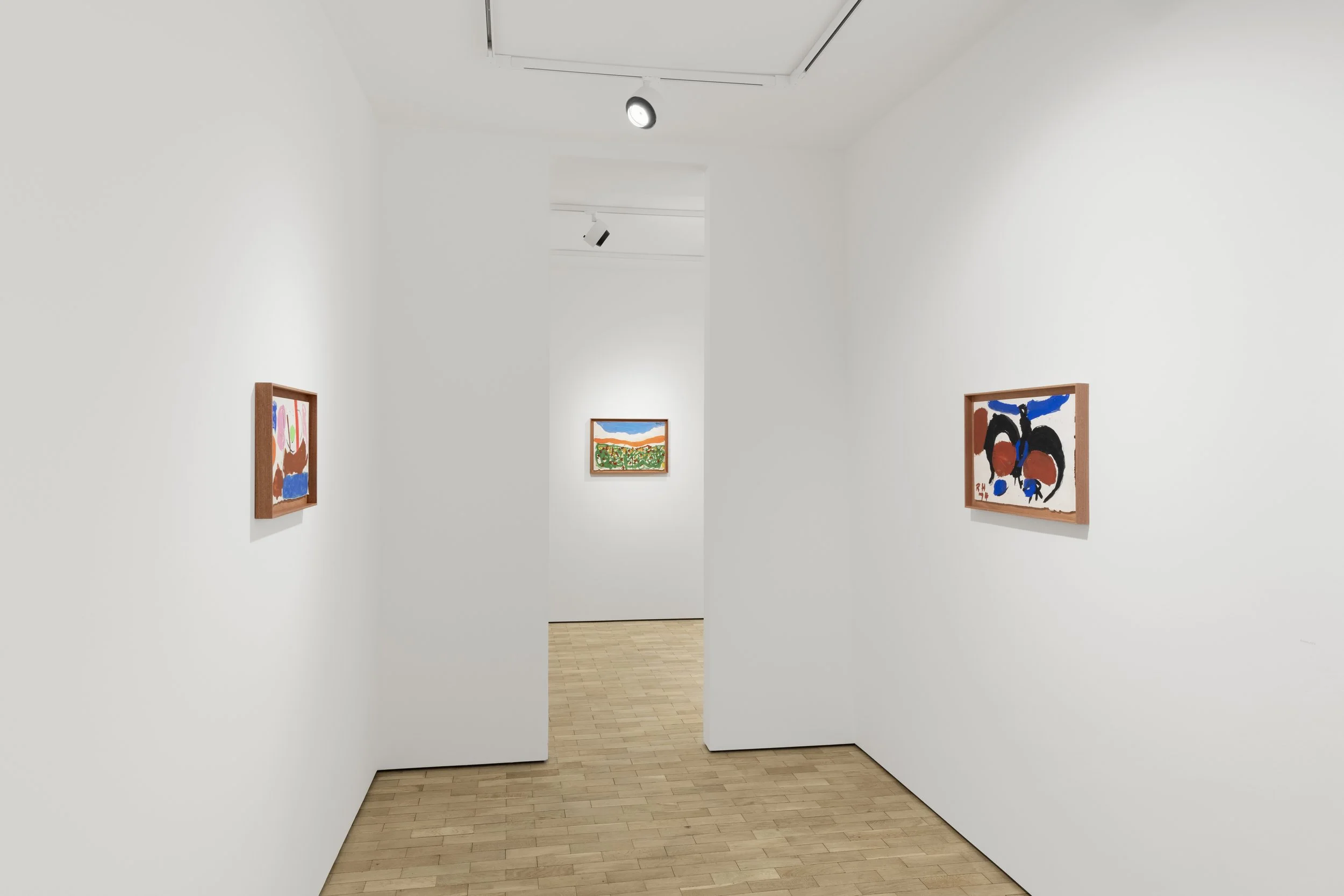
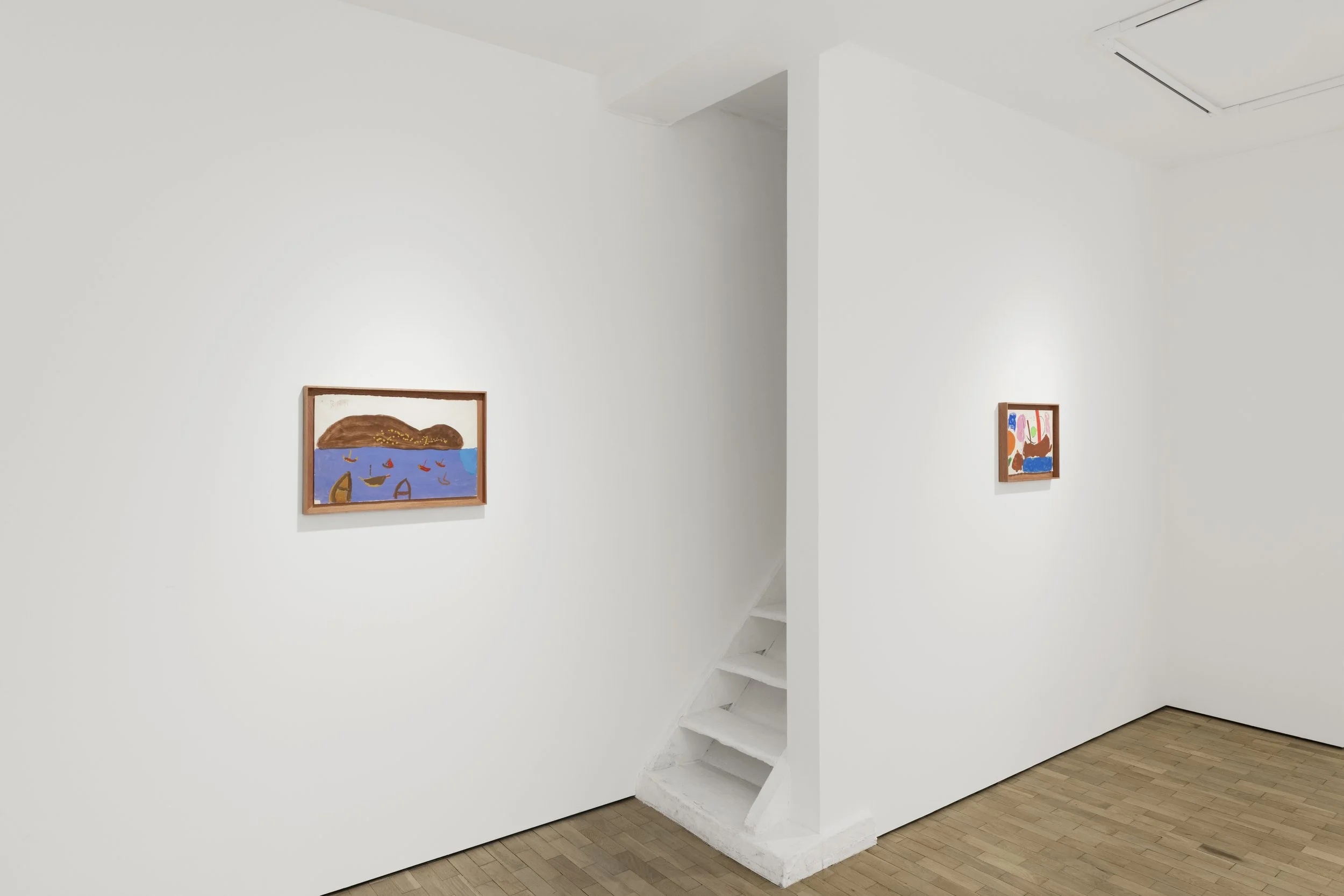
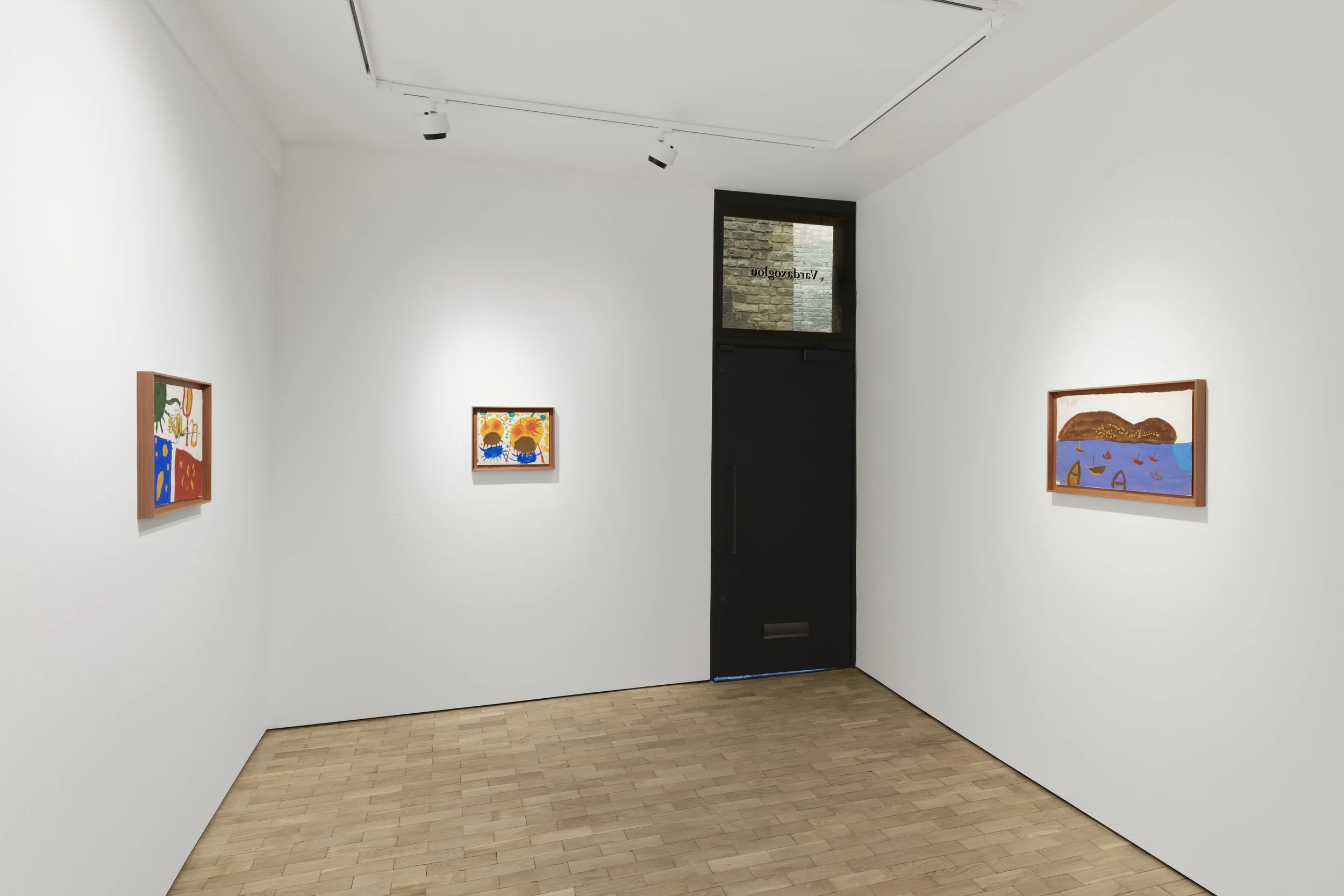
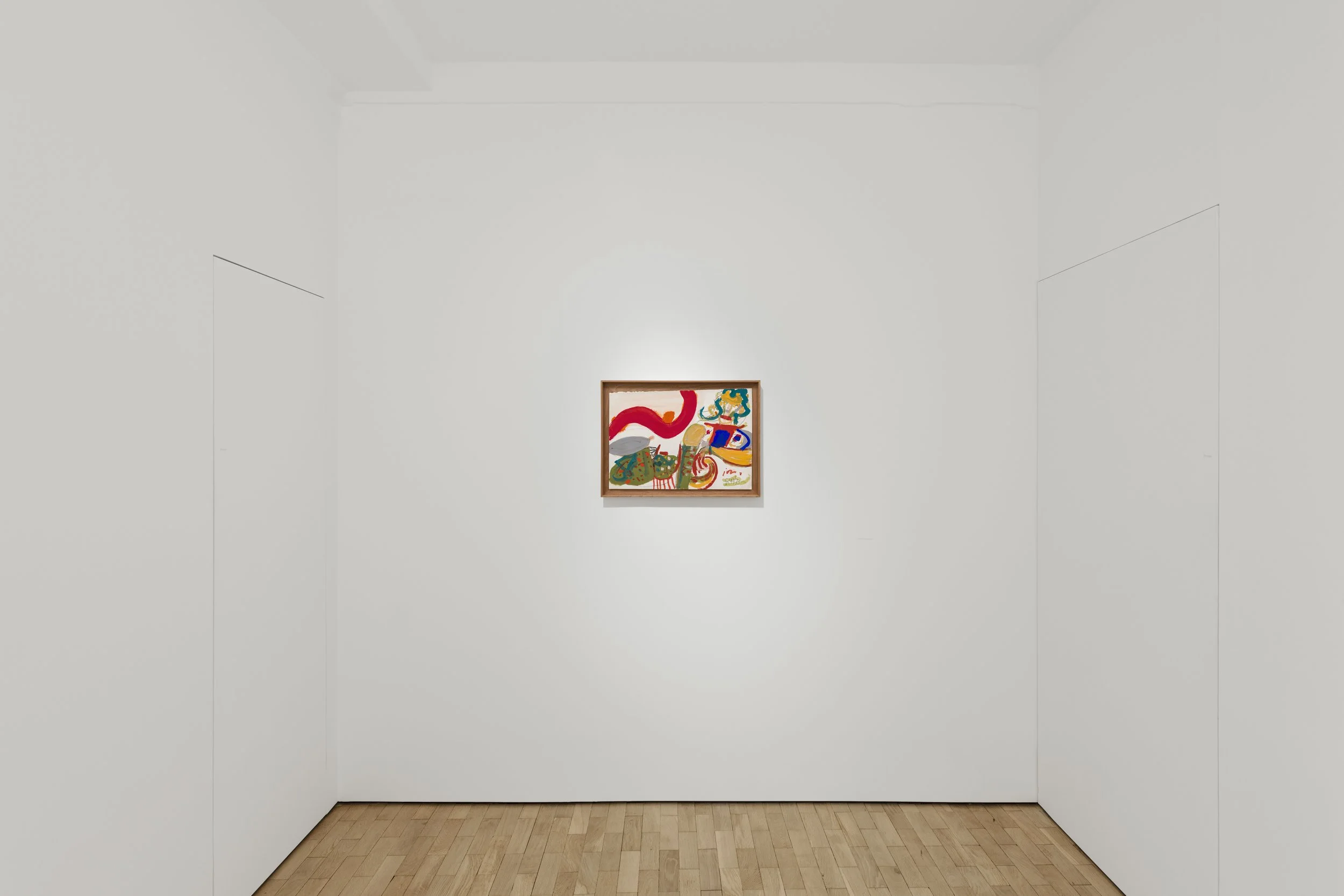
Vardaxoglou is pleased to present a group of previously unseen gouaches by British artist Roger Hilton from the artist’s estate. Produced during the final three years of the artist’s life, the exhibition shows Hilton’s reflection on figuration, embodiment, and artistic agency under conditions of physical decline.
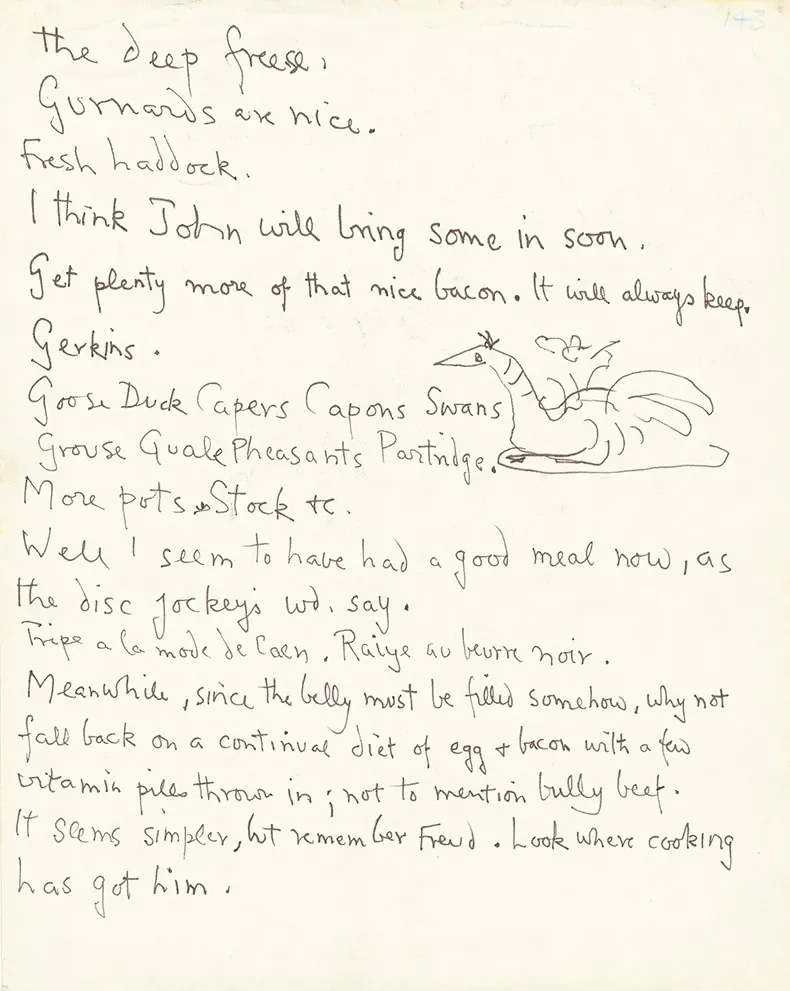
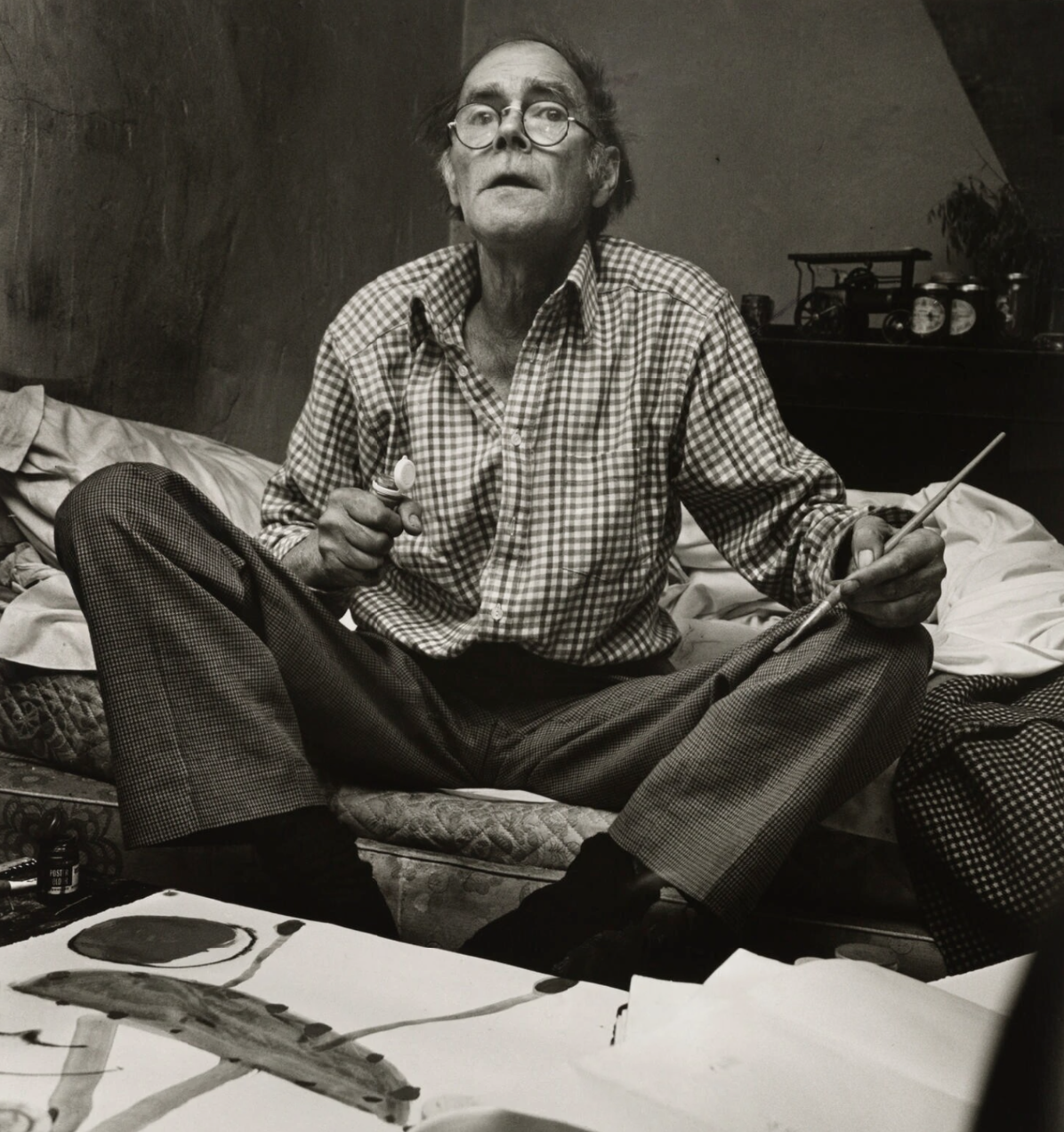
Fifty years ago, in 1975, Roger Hilton died of a stroke aged 64 at his home near St Ives. The artist had been confined to his bed in Cornwall due to severe mental and physical illness since 1973 and was slowly losing the use of his arms and legs. He began to play with paints given to his son at Christmas 1972, resulting in a series of gouaches exploring art, sex, life, and death. Animals, birds, figures, and boats are expressed with apparent abandon yet with great control. The bedroom became his studio, allowing him to work whenever he felt inclined, whether during the day or in the middle of the night. Like Picasso, artistic frenzy and freedom characterised the final years of Hilton’s life; he completely detached himself from the expectations of critics and colleagues.
A prisoner of war for three years from 1942, captured at Dieppe, Roger Hilton knew the reality of human suffering and cruelty. Following his return, he saw ‘life as a gratuitous gift’. In the 1950s and 60s, Hilton set out to reinvent figuration and became well known for paintings in which simple line and paint simultaneously communicated abstract composition and the image of a figure. Despite his geographical proximity to St Ives and his frequent association with its artists, Hilton consciously separated himself from the group and actively experimented with new ways of painting the figure. As Chris Stephens writes, ‘in the 21st century, Hilton’s position lies somewhere between the pure modernism of Europe in the early 20th century and the postmodern figuration of Hockney and the neo-expressionist work of artists such as Basquiat in the 1980s’.
The paintings Hilton produced in the 1950s and 60s, including those shown at the Venice Biennale in 1964, appear non-representational but constantly reference aspects of the human body. Certain forms recur throughout these earlier works: a few lines might suggest pubic or armpit hair, nipples, navels, an anus, vulva, or penis. The explicitness is subtle. In the late gouaches in this exhibition, however, his reinvention of figuration is no longer concealed within abstraction but moves towards direct, raw expression. Hilton came up with a set of principles that allowed for the apparent spontaneity of the works:
“Since 1972 I have produced three to five gouaches a day. I have principles connected with this new medium:
1. Never rub out or attempt to erase. Work round it if you have made a mistake. Make of your mistakes a strength rather than a weakness.
2. Wait for it. That is, if you don’t get a clear message, do nothing.
3. If you have a full brush and you have made a mark, do not think that you have to use the paint on your brush – wash it out.
4. As in life, it is not so much what you put in but what you leave out that counts.
5. Paint as if you were painting a wall (Bissiere).
6. No colour stands alone. They are all influenced by each other. This is when the dicey part comes in. I mean the balancing act.
7. Most pictures can be pulled round. If you run into head winds, tear it up.
8. Don’t drink and smoke so much & lay off the nudes. Nice, but too easy a gambit.”
Hilton said that ‘children are realists and artists are not’. His late works show an artist engaging with this realism. Upon visiting Hilton’s studio just days before he died, Hilton told Michael Canney, ‘There’s nothing else left – what else have I got?’. Shortly before his death, Hilton was singing childhood nursery rhymes, including ‘Daddy wouldn’t buy me a bow-wow’. The final gouaches in this exhibition possess something of this innocence, and show the degree to which these works operate at the intersection of regression and clarity, vulnerability and resolve.
The gouaches produced in the final years of Roger Hilton’s life stand as a testament to artistic persistence under extreme constraint. They reveal an artist who, faced with physical incapacitation and the proximity of death, reaffirmed the necessity of making as an existential act. The works included in ‘Imminent Death’ occupy a crucial position in Hilton’s output, offering both a summation and a reorientation of his engagement with figuration, abstraction, and the conditions of artistic practice itself.
For further information please contact info@vardaxoglou.com.
Roger Hilton (1911–1975) studied at Slade School of Fine Art (1929-31) and Academie Ranson, Paris (1931). In 1940 Hilton fought in the Commandos during the War and from 1942–45 was held Prisoner of War in Dieppe. Hilton represented Britain at the Venice Biennale in 1964. Major solo exhibitions and retrospectives include: Kettle's Yard, Cambridge (2009); Tate St. Ives (2006); Hayward Gallery, London (1993); Serpentine Gallery, London (1974). Hilton's work can be found in the public collections of The Fitzwilliam Museum, Cambridge; Stedelijk Museum, Amsterdam; Tate, London; Arts Council Collection; Walker Art Gallery, Liverpool; Government Art Collection; National Portrait Gallery, London.
Installation Views
Selected Works
-
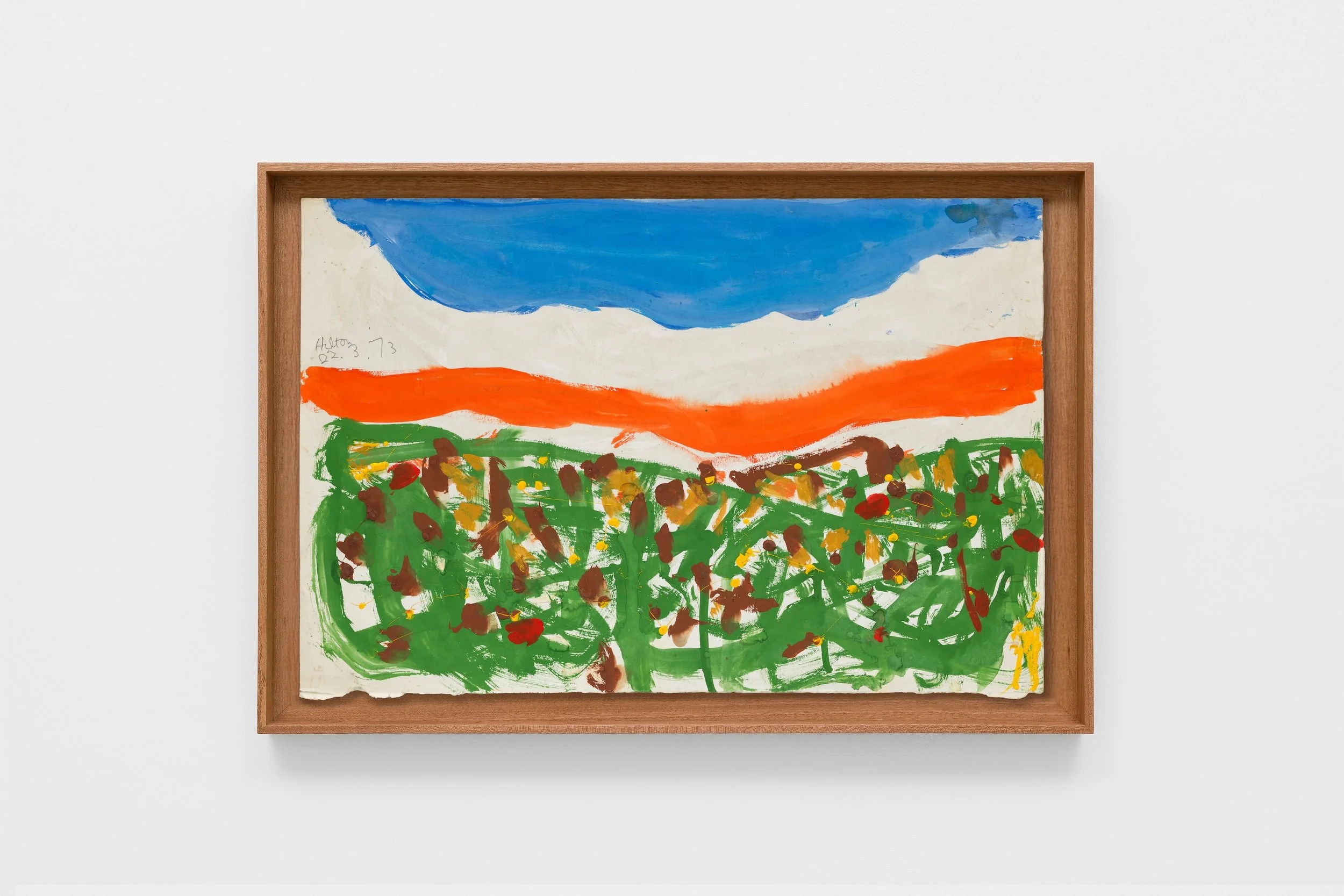
Roger Hilton
Landscape, 1973
Gouache on paper
39.4 x 60.4 cm
15 1/2 x 23 3/4 ins -
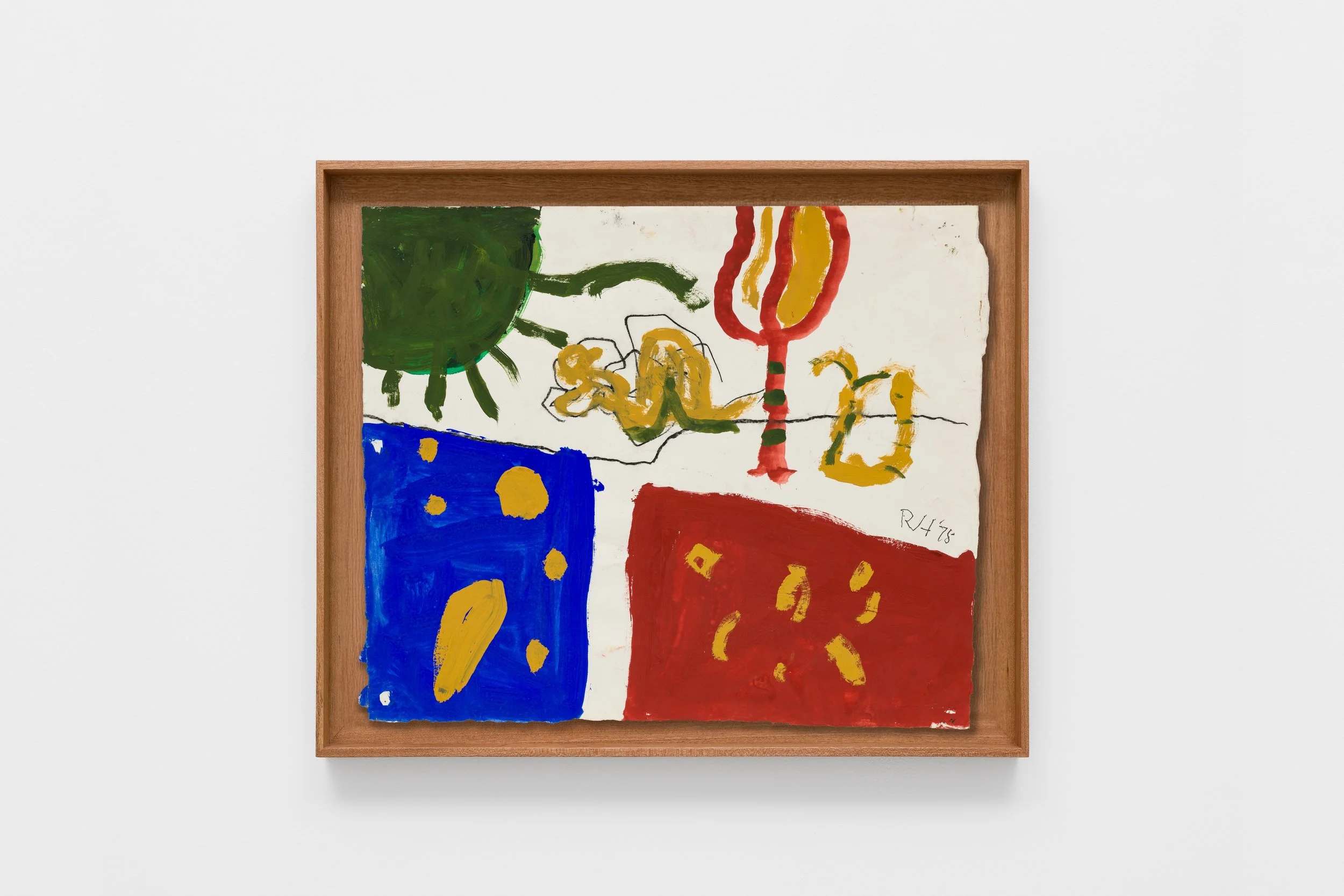
Roger Hilton
Serpent, 1975
Gouache and charcoal on paper
36.2 x 43.2 cm
14 1/4 x 17 ins -
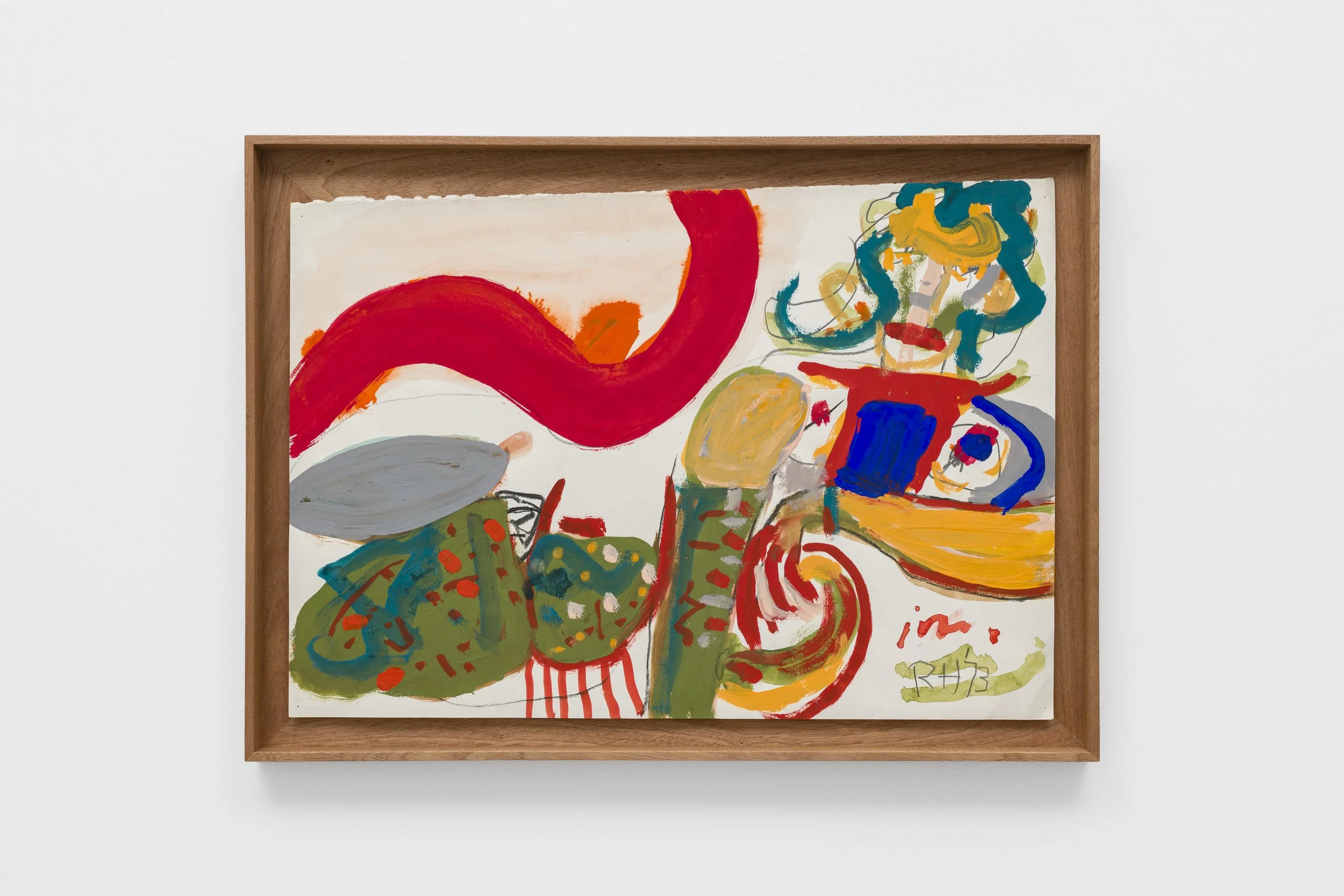
Roger Hilton
Untitled (Figure), 1973
Gouache on paper
39.3 x 55.8 cm
15 1/2 x 22 ins -
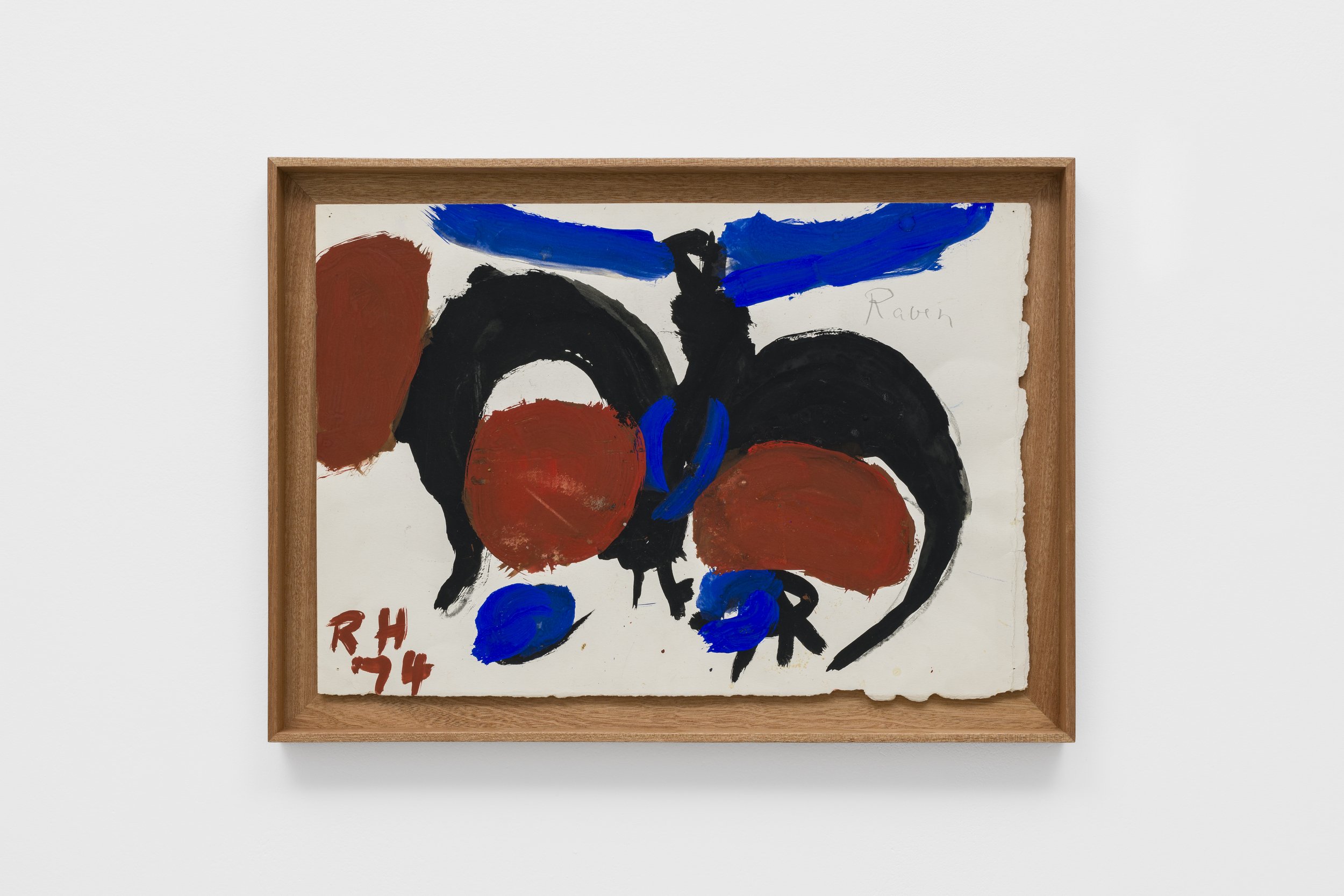
Roger Hilton
Raven, 1974
Gouache and pencil on paper
34.9 x 49.5 cm
13 3/4 x 19 1/2 ins -
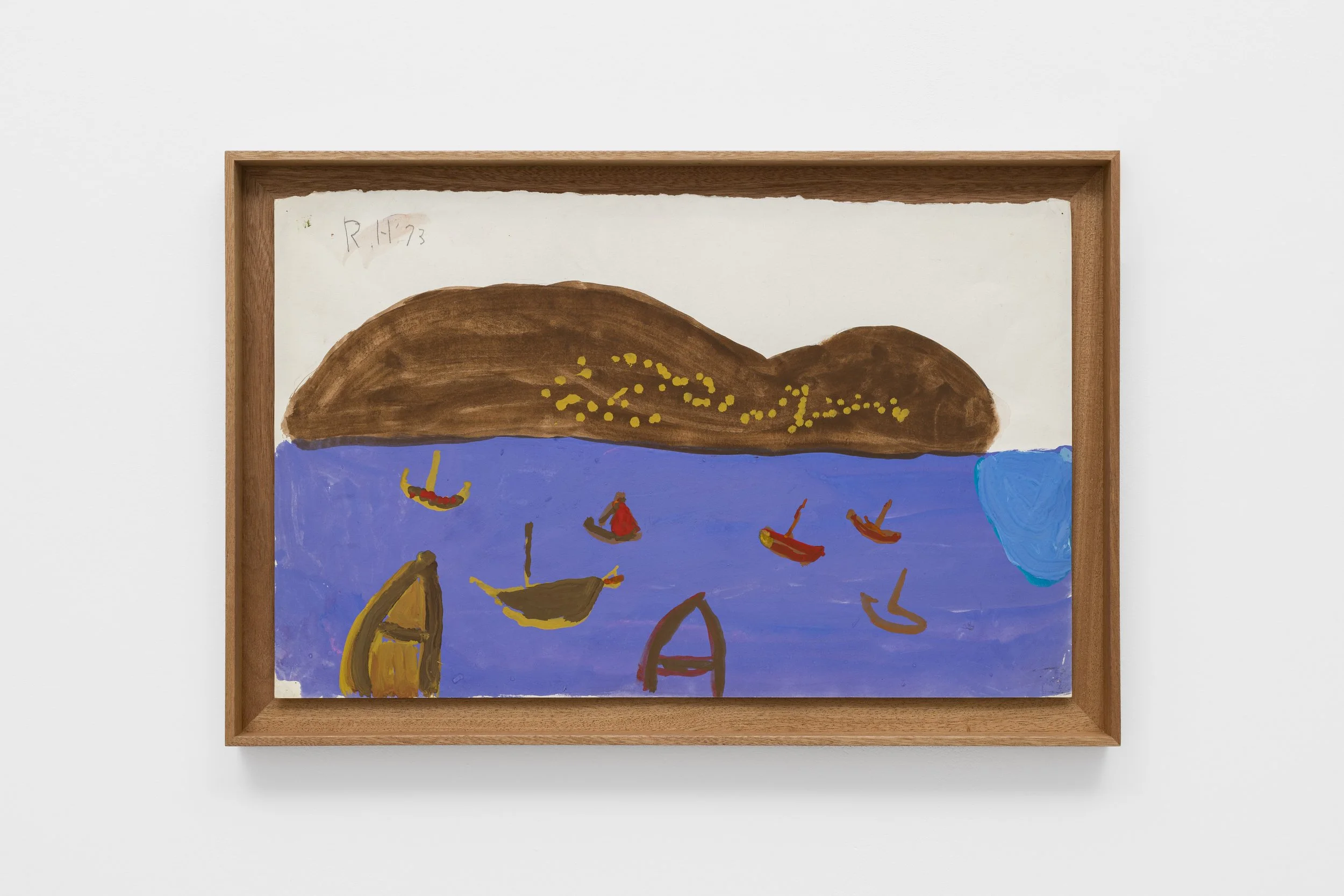
Roger Hilton
Sea, 1974
Gouache on paper
35.6 x 55.9 cm
14 x 22 ins -
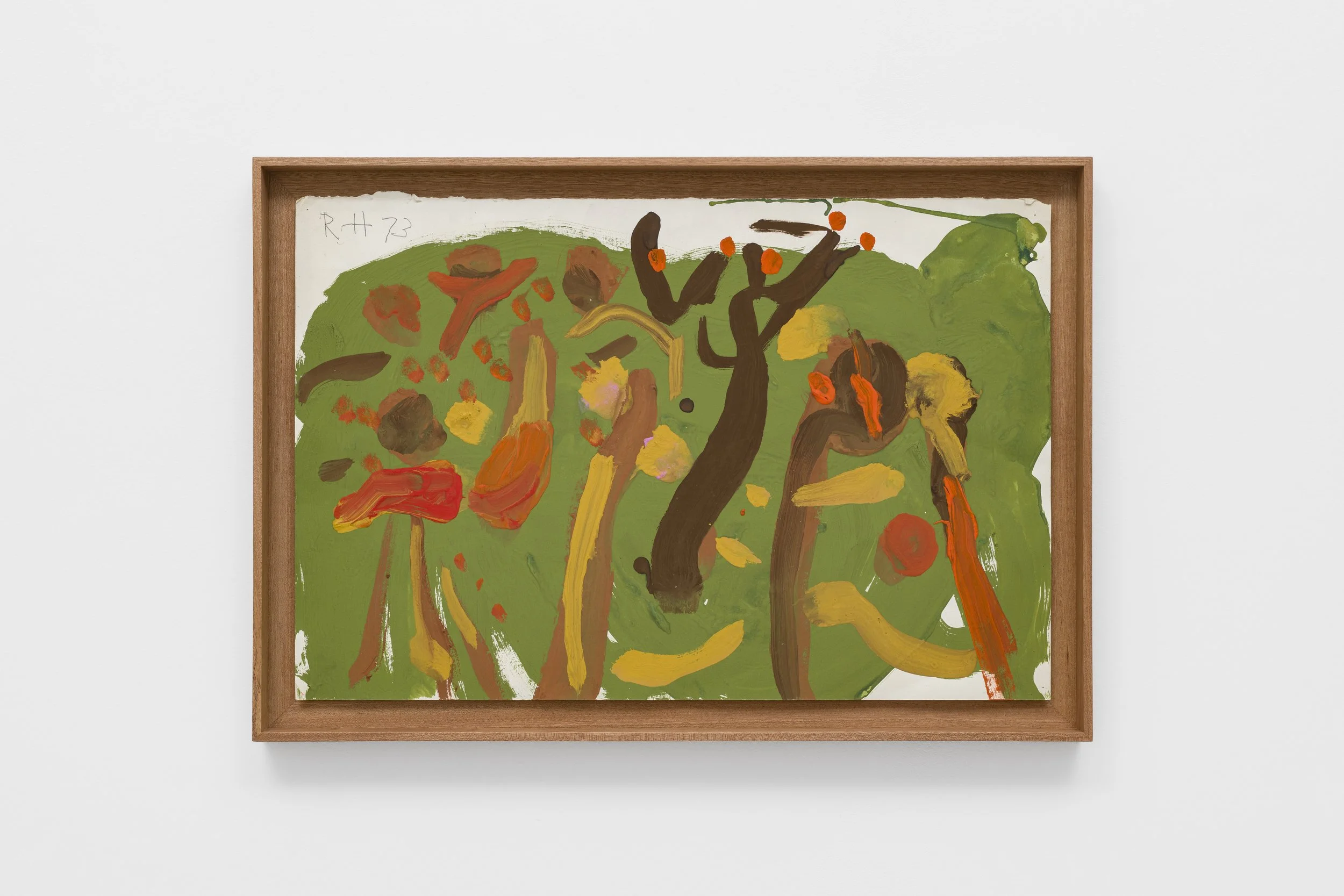
Roger Hilton
Forest, 1973
Gouache on paper
36.8 x 56.5 cm
14 1/2 x 22 1/4 ins -
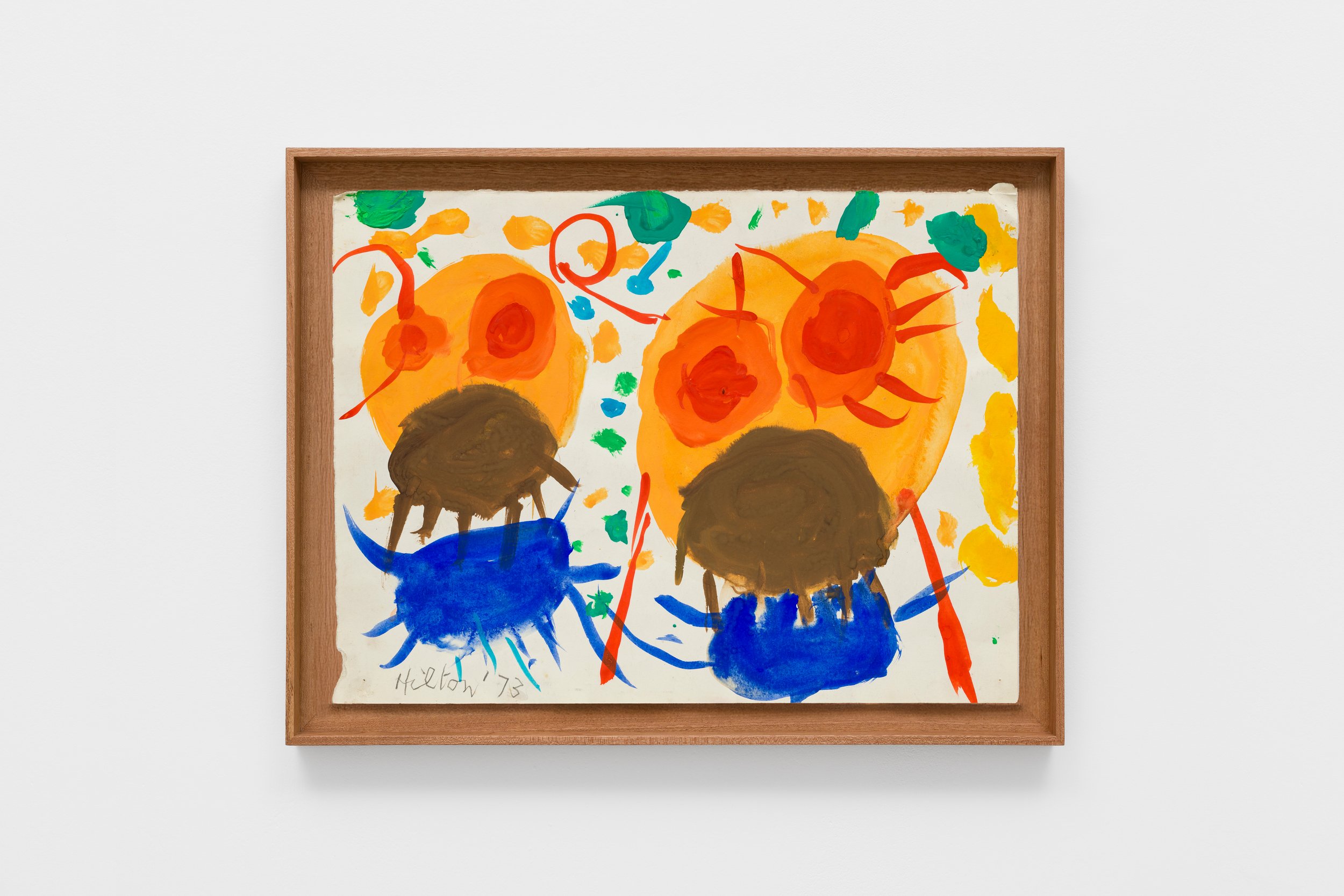
Roger Hilton
Untitled, 1973
Gouache on paper
28.6 x 38.1 cm
11 1/4 x 15 ins
Artist Page
-
![]()
Roger Hilton
b.1911, Northwood, UK
d.1975, Botallack, Cornwall, UK
Resources
-
![]()
'Roger Hilton's Appetite for Destruction'
Molly Pepper Steemson for Apollo Magazine, March 2025
-
![]()
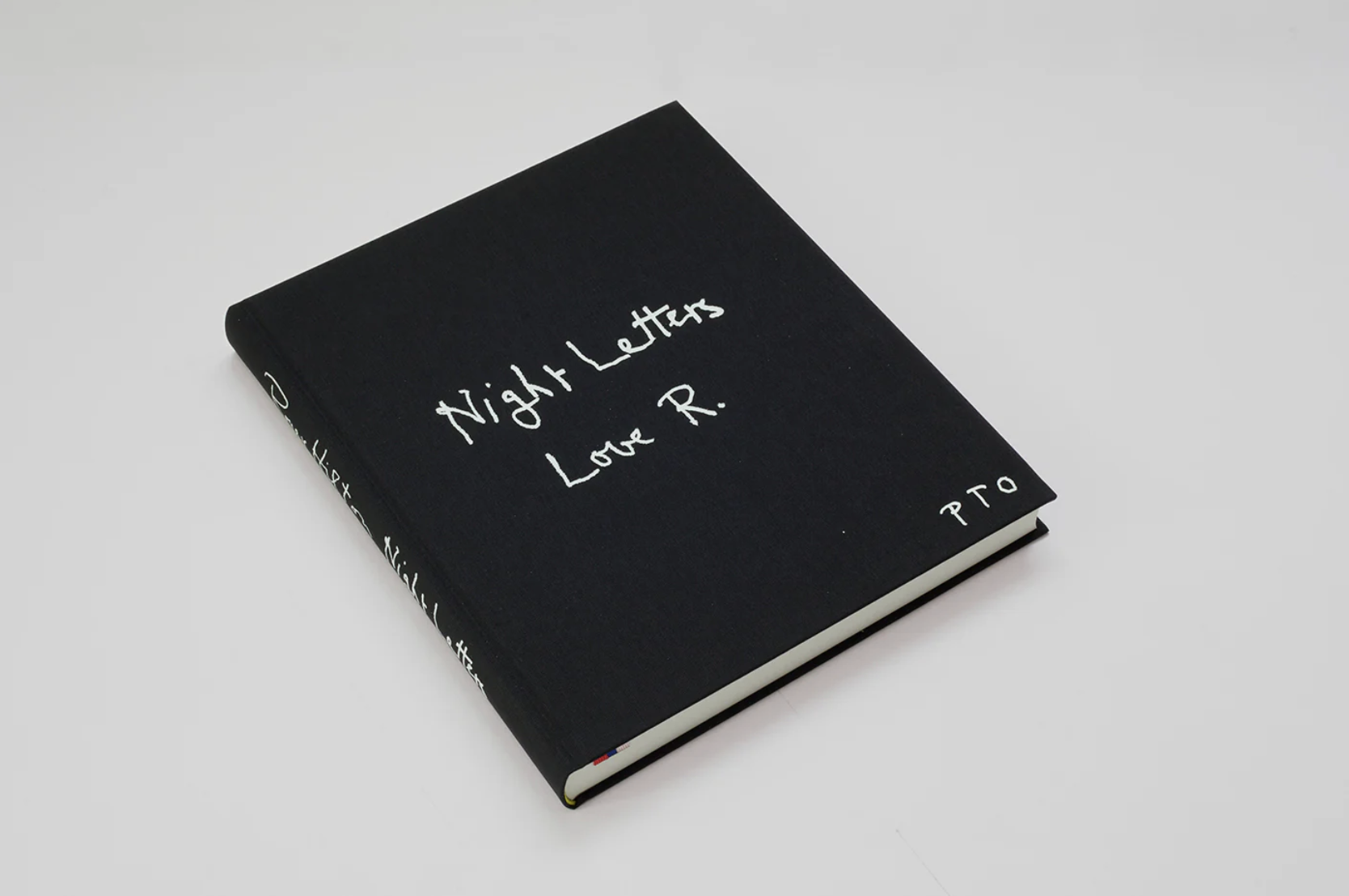
Roger Hilton: Night Letters
Edited by Timothy Bond
Published by Archive of Modern Conflict, 2009